

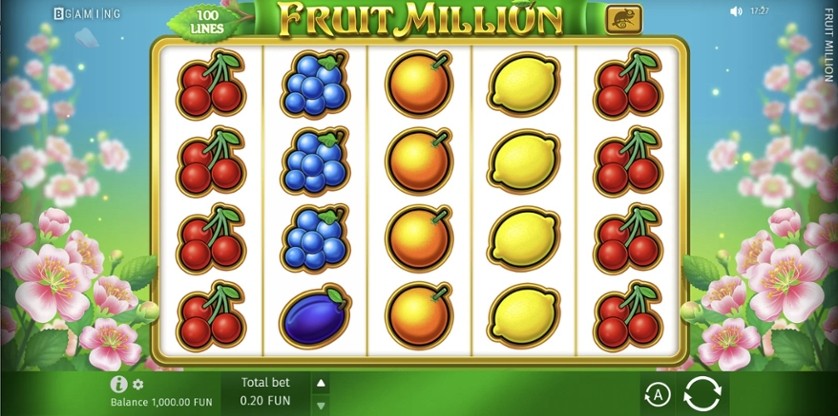
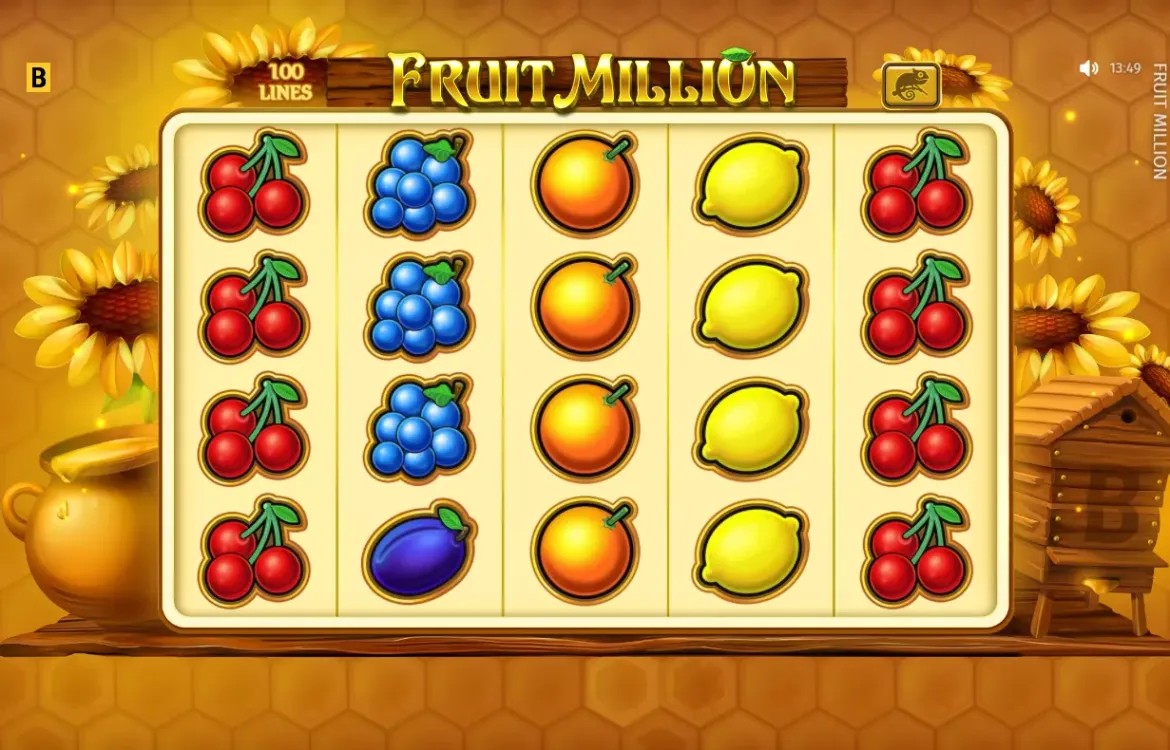
Test Fruit Million in free mode, check tempo and stakes, and play in Germany from 18+ with clear limits and breaks.
The demo mode is the most convenient way to get to know a game without every click feeling like a budget drain. Imagine you have ten minutes between two appointments and just want to find out if you like the interface. You start the test run, take a quick look at the rules menu, play a small series, and stop again. Precisely these short checks are more useful than a long session where, in the end, you no longer know why you kept playing.
In everyday life, a simple sequence helps: first calm your surroundings, then open the game. Notifications off, headphones not too loud, screen bright enough for you to clearly recognize numbers and symbols. Then you look for three things: Where are the game rules, where do you set the stake, and how do you end an automatic spin function (if offered). Many players only find these points when they urgently need them. If you click on them once beforehand, you will play more relaxed later.
During the test, pay special attention to your pace. Imagine you catch yourself clicking faster as soon as things get "quiet." This is not a sign that you need to become "braver," but an indication of impatience. Take it seriously: take a break, read the displays, and then continue playing – or end the round. This way, the demo mode remains a tool, not a pull.
All promotional incentive structure is clearly stated in writing and/or via electronic means in an easily understood manner. All codes are accompanied by an explanation of what the code is for, who is eligible to use the code, and how it should be used. As such, players are less likely to be confused about what is required of them in order to receive a reward and how the reward will be applied after receiving it. The promotional incentives provided to participants provide them with time to become familiar with the gaming system's mechanics, their interface, and progress, before deciding how deeply they wish to become involved with this platform. Therefore, players are encouraged to participate in an informed manner, rather than being pressured or tempted to act quickly.
When trying it out, what matters is not whether "something comes," but whether you understand what you are controlling. Imagine you're playing on your phone and your thumb slips over the stake slider - suddenly everything feels different, even though you only wanted to test. That's why a quick operational check is worthwhile: you consciously move the stake up and down (with demo credit), look at the display, and return it to a calm starting value. Then you play a series with a constant stake so you can recognize changes in the gameplay.
In the rules menu, you'll usually find the crucial answers: Which symbols are special, how bonus phases are described, and what a single spin can trigger. Imagine you see a striking animation and think, now "something must" happen. If you then look at the rules, you often realize: It's an event, but not a promise. This clarity later protects you from the typical mistake of staying longer than planned out of expectation.
Another point is readability. Consciously test on your device: Are the numbers large enough, do you recognize differences between symbols, and can you find the most important buttons blindly without constantly aiming? Imagine you're playing in the evening with low light - if you're constantly searching for the stop button, your stress increases. In test mode, you can solve this before money is involved: adjust light, position, and tempo.
If you notice that you immediately want to adjust the stake after every small change, stop briefly. Ask yourself: Am I trying to optimize, or am I just compensating for a feeling? This question sounds simple, but it separates conscious playing from reflexes.
As soon as real money becomes an option, you need a framework that also works on bad days. Imagine you're tired, a little annoyed, and just want to "switch off for a moment." That's when limits are important, because your mind is more likely to seek quick stimuli. In Germany, 18+ applies, and responsible gaming practically means: limiting time, planning a budget, consistently incorporating breaks, and using time-outs or self-exclusion if needed.
Many think control is a matter of character. In reality, it's a setup. You set rules before your mood changes, and then use them when you're less clear-headed. This isn't strict; it's relieving. If the "stop" decision has already been made, you don't have to discuss it later.
Set your budget so that you can accept it as entertainment costs. Imagine you deposit money and immediately feel the urge that "today it must pay off." That's a bad start because pressure arises before anything has even happened. Better: You define an amount for a session, set a timer, and decide that you will really stop after the budget runs out - no matter how it goes.
A helpful trick is the two-phase rule: first a short test session, then a break, then only a second session if you would still decide just as calmly. Imagine you come back after the break and realize you actually don't feel like it anymore. Then the right step was not "continue," but "close." That's what control looks like in everyday life.
Breaks seem small, but they break the autopilot. Imagine you're clicking faster without realizing it because the game is running smoothly. Then a firm rule helps: after each block of spins, get up, get water, look away briefly. If you do this consistently, the risk of continuing to play out of habit decreases.
Reality checks are there to make time visible. When a reminder reaches you, truly read it and consciously decide: continue or stop. And if you notice that you no longer want to decide, but just "one more time," a time-out is the cleanest solution. You remove the possibility of starting at the wrong moment, and that is often the best form of self-protection.
The switch to real money should feel like a controlled step, not a leap. Imagine you had a good feeling during the test run and immediately want to start "for real." That's when typical mistakes happen: too high a stake, too long a session, too few breaks. Do it differently: first account setup, then limits, then a short real-money session that you can end as easily as the test run. In Germany, it's clear: only from 18+ and within your own limits.
Think of real money not as the "next level," but as a different kind of responsibility. In demo mode, you can experiment. With money, you need a routine that holds up even under stress. The goal is not to play as long as possible, but to play cleanly.
Complete account setup when you have time, not between two appointments. Imagine you hastily type in information, and later something doesn't match. Then leisure time turns into a correction loop. Instead, take a calm time slot, enter everything cleanly, and plan that verifications may vary depending on the provider. This is normal and has nothing to do with "luck."
If the process already makes you nervous, that's a good sign: Stick to the test mode and postpone real money. It's perfectly fine to test for another week rather than out of impatience going into a session that immediately feels heavy.
A deposit is a budget decision, not an entry ticket to "action." Imagine you want to compensate for a bad day and impulsively stake too much. Afterward, you feel pressured because you want to "justify" why you deposited. Better: You define your session budget beforehand, set a time limit, and accept that entertainment sometimes costs money without having to get it back.
Practically, the stop line helps: When the budget is reached, it's over. No exceptions. And if you win, secure a portion and stop earlier, rather than staking everything again. That sounds unspectacular, but it's precisely what reduces long-term stress.
Withdrawal is a process, not a button-push moment. Imagine you want to secure everything immediately after a good session, but a step is still missing. If you then click frantically, it becomes confusing. It's better to stop, read the message, proceed step by step, and contact support only with clear information: device, which step, which display. This way, you're more likely to get a real solution instead of general answers.
Also, plan so that you are never dependent on an immediate withdrawal. If you "absolutely" need to wait for money tomorrow, pressure arises, and pressure leads to bad decisions. Entertainment works better when it's not tied to financial urgency.
Whether you play on your phone or on a desktop often determines your behavior. Imagine you're playing on the go, receiving messages, and still clicking away. That's the classic multitasking trap. A good test run therefore not only examines the game but also your environment: Where are you, how distracted are you, and how easily can you stop? The better you know this, the less likely you are to fall into automatic behaviors.
Use trial mode to test your habits. Not just “how does it look?”, but “how do I play?”. And if you notice that you never stop without a break, that's information you should take seriously before real money even becomes an issue.
Most errors on the phone happen due to finger movement, not the game itself. Imagine you want to stop but hit a different button because you're walking or lying down while playing. The solution is trivial but effective: Sit down, hold the device steadily, play slower. If you notice that you can't reliably hit the important buttons, reduce your pace or switch to a tablet or desktop.
Another tip: Only play mobile in short blocks. No autoplay, no long sessions. Imagine you're waiting somewhere and playing “just for a moment,” then a moment quickly turns into a long time. A timer is your best friend here.
On a desktop, the overview is usually better, but distractions can be greater. Imagine you have ten tabs open, a stream running in the background, and you're clicking at a rhythm you no longer control. Make it simpler: just the game, a clear break, a timer. If you notice yourself scrolling or chatting simultaneously, that's a signal to end the session or restart it later.
A quiet setup reduces stress: pleasant lighting, a comfortable seat, no constant interruptions. This sounds like comfort, but in reality, it's control.
The biggest mistake is changing your bet out of impatience. Imagine nothing happens for a while, and you think a higher bet “helps.” In a slot context, this is usually just a feeling that costs you money faster. In trial mode, you can recognize exactly this reflex and build a counter-rule: the bet remains constant for a block, changes only after a break.
A second mistake is skipping breaks when it seems exciting. Imagine you see several striking symbols and keep going, even though you actually wanted to stop. Therefore, set yourself stops that are independent of the game: Time is time, end is end.
If you don't know how to start, use a mini-checklist. Imagine you want to make a real judgment in 15 minutes instead of just letting yourself be carried away. Then proceed as follows: open the rules, play a short series, pause, a second series, finish. Afterward, ask yourself: Was it relaxed, or did it immediately draw you into a fast pace? This answer is more important than every single spin.
Here is a compact overview that you can keep in your head, without having to invent numbers or sugarcoat anything:
Checkpoint | What You Specifically Do | How You Notice Success |
Rules | open once and read special features | you don't have to guess why something happens |
Bet | start small and only change after a break | you play without pressure and without sudden jumps |
Pace | start slowly, then vary consciously | you can explain events, not just feel them |
Breaks | stand up and stop after each block | you end sessions before autopilot starts |
Focus | Notifications off, no multitasking | you click because you want to, not because it's running |
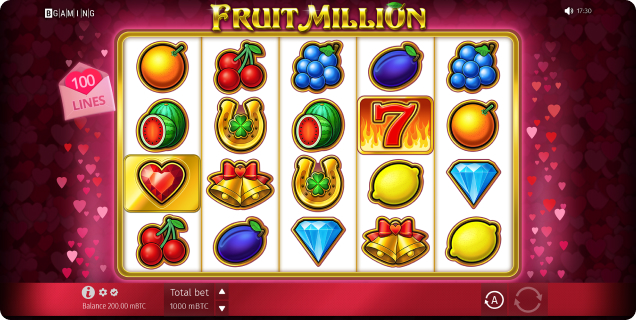
A meaningful test run is short, structured, and honest. Imagine you don't want to "play maximally" today, but rather find out if Fruit Million suits your flow. Then you play in small blocks, read the rules, take breaks, and end the session as soon as you notice you're clicking faster or feeling pressure. That's how it remains entertainment, not habit.
If you use real money later, follow the same procedure: limits first, set a budget, set a timer, plan a break. In Germany, 18+ applies, and responsible gaming primarily means you can stop at any time without having to prove anything to yourself. Stopping is not a defeat, but a sign that you are in control of your game.
Many offers allow a free test run directly in the game, without you having to enter data or deposit money beforehand. Imagine you just want to check the operation and pace - that's perfectly sufficient. Still, pay attention to 18+ and play consciously in short blocks, so that "short" doesn't automatically become "long".
Look for special features, betting limits, and instructions on how bonus phases are generally described. Imagine you see a striking animation and want to click through immediately - then a quick look at the rules helps you not to play out of expectation. Once you understand the logic, the stress noticeably decreases.
Start slowly and play a short series, then consciously stop and describe to yourself what happened. Imagine you can't explain anything after 20 spins - then it was too fast. Reduce speed, avoid multitasking, and set fixed breaks before you click further.
A time limit per session, a budget for deposits, and a clear plan for breaks are a good start. Imagine you lose track of time, even though you "just wanted to play for a short while" - a timer ends that discussion immediately. If you notice you want to top up, a time-out is often the cleanest brake.
End the session and take a break before you decide again. Imagine you think "I'll get that back" - that's pressure, not a plan. Step away from the screen for a moment, breathe, and only restart later when you can play calmly and consciously again.
Write briefly and specifically what happened: which device, which step, which message or behavior you see. Imagine you click ten times in anger - then it becomes unclear what is cause and what is effect. Stop first, gather the information, then contact support objectively and save yourself time.
When playing no longer feels like leisure, but like duty, pressure, or an attempt to control a feeling. Imagine you can't stop, even though you want to - then distance is the best decision. A time-out or self-exclusion takes away the daily discussion and gives you back peace.
Fruit Million is a fascinating game that combines the best of online slots with an exotic and exciting theme.